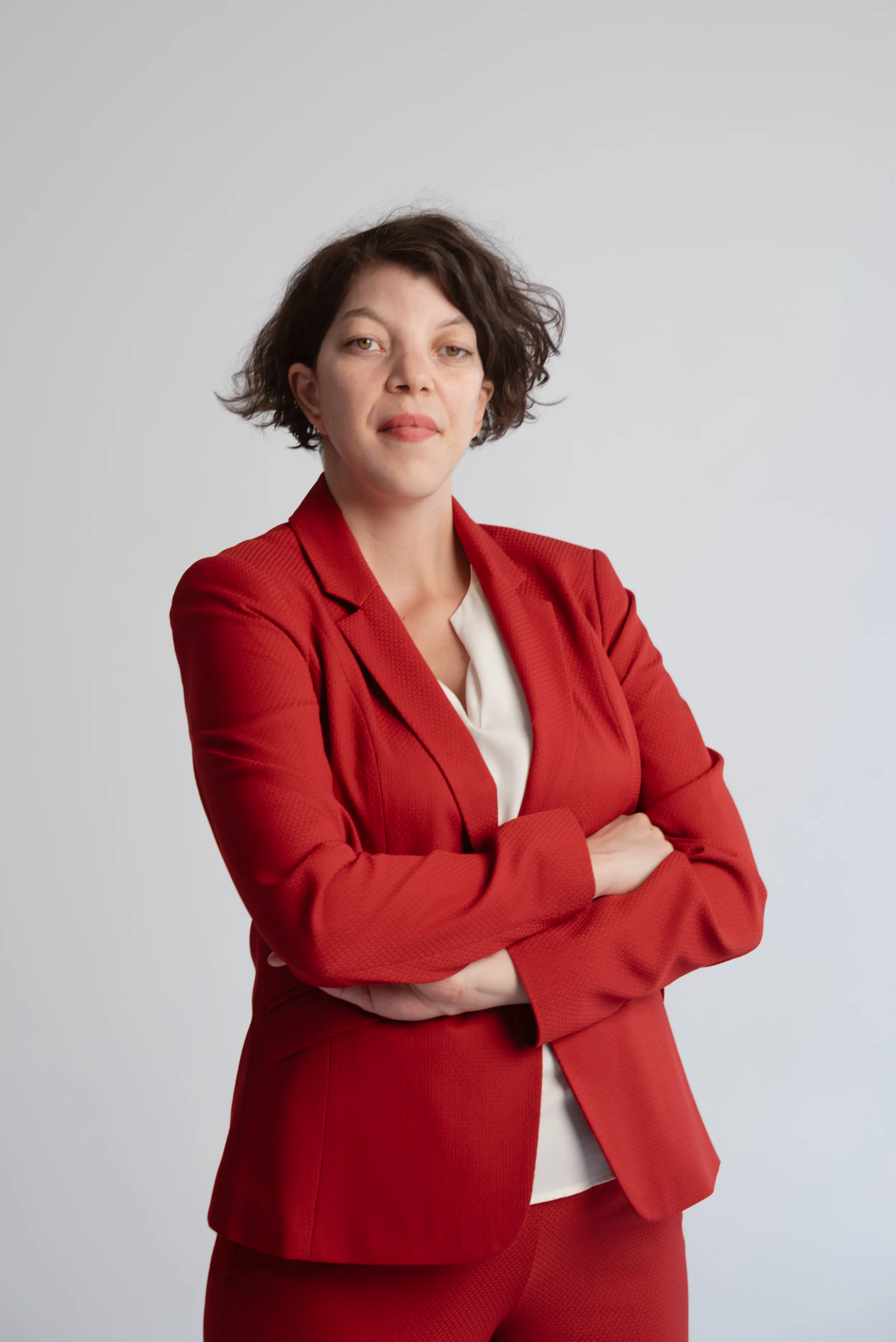
Borbála Szentimrey
Philosophy
I believe that design is not decoration, but structured thinking: it builds a bridge between people, digital systems, and meaning. The goal of my work is not merely to create aesthetic interfaces, but to design authentic, user-centered visual ecosystems that simultaneously drive business goals, emotional connection, and long-term value. As a Creative Technologist, I see the future of contemporary cultural and innovative projects in digital transformation—at the exact intersection where brand strategy, high aesthetic standards, and agile technology meet.
I acquired my classical fine art foundations at the drawing easel and the ceramic wheel. Working with ceramics taught me respect for the material, patience, and rigorous technological discipline. It was here that I first understood that form alone is not enough: function and aesthetics must create an organic unity. Today, this mindset fundamentally shapes how I think about digital spaces, structures, and user experience.
Classical Foundations
Toolbox
Product Design & Sculpture
Material Science & Technology
Visual Aesthetics
Mindset
Iterative Approach: The commitment to experimentation, prototyping, and continuous refinement.
Methodological Discipline: Strict adherence to project workflows to guarantee premium, high-quality outcomes.
At the Hungarian University of Fine Arts, my creative practice was coupled with theoretical and systems-level knowledge. Over time, my individual artistic mindset naturally evolved into a collaborative, managerial, and curatorial perspective: I learned how to transform an abstract vision into a well-functioning, tangible project. It was through managing exhibitions, artistic collaborations, and complex cultural projects that I truly came to understand the vital role of structured coordination and strategic planning.
Management Software
Toolbox
Project Management
Artistic Strategy
Curatorial Planning
Mindset
Structured Abstraction: The ability to shape complex, theoretical concepts into transparent, logical systems.
Organizational Bridge (Stakeholder Management): Striking a delicate balance and finding common ground between artists, institutions, and technical teams.
Over time, clay was replaced by pixels and code. I still think like a sculptor within the digital realm: user experience represents the core anatomy, while design provides the rhythm and texture of the surface. For me, frontend development is not merely technical execution—it is the art of sculpting digital spaces.
Design Software
Toolbox
Figma
UI/UX Prototyping
Adobe Illustrator, Adobe XD, Adobe Photoshop
Mindset
Design Thinking: a problem-specific design workflow
Information Architecture: establishing a logical hierarchy of content and function.
Technology is not a self-serving tool for me, but a creative medium. Through frontend development, interactive systems, and digital interface design, I look for ways to turn technical frameworks into visual, immersive, and sensory experiences. Clean code, responsive architecture, and user experience are fundamentally part of the same creative journey.
Web Technologies
Toolbox
HTML5 / CSS3 / SASS
WordPress (Custom Themes)
Javascript / Jquery / Basic PHP
AI Prompt Engineering
Mindset
Cross-browser Optimization: technikai stabilitás minden felületen
Clean Code: a transparent and sustainable approach to development
To me, a website is not just a passive online presence—it is a living, functional ecosystem. Design, content, technology, and user experience collectively shape how a brand is perceived in the digital space. This is why I consciously bridge the gap between creative visual thinking and a results-driven business strategy.
Marketing & Strategy
Toolbox
SEO / Google Analytics
Content Strategy
Digital Transformation Consulting
Mindset
Holistic client management: a comprehensive overview of the entire project lifecycle
Strategic Communication: establishing a clear, articulate connection between business goals and technical execution
Through my curatorial and project coordination endeavors, I mastered the ability to harmonize diverse artistic viewpoints into a unified direction. For me, arts management is not a matter of administration—it is a delicate, sensitive balance between creative freedom and a robust, working structure.
Management Software
Toolbox
ClickUp, Monday
Microsoft Office 365
Mindset
Risk Management: Mitigating risks and navigating unexpected situations with effective, solution-oriented action.
Cross-Functional Leadership: Aligning and synergizing multidisciplinary teams to achieve shared project goals.